martedì 4 febbraio 2025

Incontro 10

  Incontro 10

Integrazione di strumenti digitali nelle lezioni CLIL
Uso di Padlet
Risorse online e piattaforme educative
Creazione di progetti digitali CLIL
Engagement Strategies:
Mirror
Rate it 
Response cards
AI and CLIL 
Prompts


Mirror

Mind mirror activities enable language teachers to integrate target language objectives with the development of critical thinking skills. According to Facione (2007), critical thinking is defined in terms of six cognitive skills: interpretation, analysis, evaluation, inference, explanation, and self-regulation. These activities focus on three key cognitive skills:

Interpretation: Students comprehend and express meaning based on experiences, situations, data, and beliefs. They categorize key elements from a story and apply them to create a visual representation of a character’s perspective in a mind mirror project.


Inference: Learners draw conclusions based on evidence and reasoning. In mind mirror projects, students clarify the connection between key elements and character identity.


Self-regulation: Students monitor and improve their critical thinking skills throughout the project, becoming more self-aware, confident, and autonomous critical thinkers2. Mind mirror activities provide a valuable tool for language teachers to foster these essential cognitive abilities in their students.

                                              Rate IT


Response cards

Response cards are a valuable teaching tool that can enhance student engagement and participation. They are typically used in various educational settings, including language classrooms. Here’s how they work:

  1. Purpose: Response cards serve as a quick and interactive way for students to provide answers, opinions, or feedback during a lesson. They encourage active participation and help teachers gauge student understanding.

  2. Implementation:

    • Preparation: Teachers create a set of response cards (usually index cards or small pieces of paper) with different prompts or options. These prompts can be related to vocabulary, grammar, comprehension, or any other topic.
    • Distribution: Each student receives a response card at the beginning of the lesson.
    • Prompting: When the teacher asks a question or presents a prompt, students hold up their response cards to indicate their answer. For example:
      • If the teacher asks, “What’s the opposite of ‘happy’?” students can hold up cards with “sad” written on them.
      • If discussing a story, students can hold up cards with symbols (e.g., thumbs up for liking a character, thumbs down for disliking, or a question mark for confusion).
    • Variety: Teachers can use different types of response cards (e.g., multiple-choice options, true/false statements, or open-ended prompts).
  3. Benefits:

    • Engagement: Students actively participate and feel involved in the lesson.
    • Assessment: Teachers can quickly assess student understanding and adjust instruction accordingly.
    • Variety: Response cards add variety to classroom interactions and break the monotony of traditional Q&A sessions.
    • Inclusivity: All students have an equal opportunity to respond, regardless of their comfort level speaking aloud.
  4. Adaptation:

    • Language Learning: In language classes, response cards can be used for vocabulary drills, grammar exercises, or discussion prompts.
    • Content Areas: They are also effective in other subjects (e.g., math, science, history) to reinforce concepts.
    • Digital Tools: Virtual classrooms can use digital response tools (e.g., polling apps) for the same purpose.


---------------------------
  Lesson

Engage

Scaffolding

Photocopy Wordsearch

Explore/Explain 


Elaborate
IT IS YOUR TURN 
Evaluate


My prompt

you are an EFL teacher, you need to prepare a CLIL lesson about St. Valentine day level of English B1 with activities and assessment use the 5E methodology

Certainly! Here's a sample CLIL lesson plan about St. Valentine's Day using the 5E methodology for an English language class at level B1:
**Topic: St. Valentine's Day**
**Level: B1**
**1. Engage:**
- Show pictures related to St. Valentine's Day and ask students what they know about the celebration. 
- Discuss the history and origin of St. Valentine's Day briefly.
- Engage students in a short conversation about the importance of love and friendship in their lives.
**2. Explore:**
- Provide students with a reading passage about the history and customs of St. Valentine's Day.
- Ask students to work in pairs or small groups to discuss the main ideas and share their thoughts on the topic.
- Have a class discussion to explore different perspectives on the celebration.
**3. Explain:**
- Introduce key vocabulary related to St. Valentine's Day such as "romance," "heartfelt," "affection," etc.
- Explain the cultural significance of the holiday and its traditions.
- Provide examples and explanations to ensure students understand the context.
**4. Elaborate:**
- Divide students into groups and assign them a task to create a short presentation about St. Valentine's Day customs in different countries.
- Encourage creativity and research to enrich their understanding of the topic.
- Allow groups to present their findings to the class and engage in discussions.
**5. Evaluate:**
- Assessment Task: Ask students to write a short essay reflecting on the importance of love and relationships in their lives, connecting it to the theme of St. Valentine's Day.
- Assessment Criteria: Language accuracy, coherence, relevance to the topic, and critical thinking skills.
- Provide feedback to students on their essays and discuss ways to improve their writing.
By using the 5E methodology, students will be actively engaged in the learning process and have the opportunity to explore, explain, elaborate, and evaluate their understanding of St. Valentine's Day in a meaningful way.


------------------
Task 3: Crea un Padlet da usare come Learning Diary, crea 2 post nei quali riassumerai brevemente qualche incontro, copiando i link usati e testati
 

AI and CLIL

Prompting

AI prompting refers to the process of interacting with an artificial intelligence (AI) system by providing specific instructions or queries to achieve a desired outcome.

https://www.oneusefulthing.org/p/a-guide-to-prompting-ai-for-what


https://originality.ai/blog/ai-prompt-generator

Proviamo un nuovo tool

https://magictool.ai/chrome/signedin/


martedì 28 gennaio 2025

Incontro 9

Incontro 9

Lesson Plans (PPP-5E)

Lapbooks

Instructional Models

Planning and observation checklist

Mind Maps

Concept Maps

Inclusion


--------------

PPP

---------------------------------

5E Model


http://www.recsam.edu.my/images/everything/OnlineLearning/Science/2020_Science_Gen_5E%20Instructional%20Model.pdf

------------------

Engage


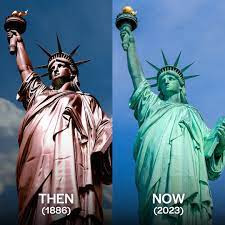
  Meme: Leaving before she gets deported!

Scaffolding


Vocabulary: symbol, iron, copper, torch, tablet, robe foot, chain, oxidation, crates, ties, riveted, sheets

https://www.kidsacademy.mobi/printables/statue-of-liberty/

..........................

Explore(jigsaw)

Set 1: The Statue's Origins- Set 2: The Construction- Set 3: The Design and Symbolism- Set 4: Moving and Assembling- Set 5: Interesting Facts

Jigsaw: Who knows (who-when-what.....?)
Questions: 
  1. Who gave the Statue of Liberty to the USA? 
  2. Where was the Statue of Liberty made?
  3. Who designed the steel frame for the statue? 
  4. What does the torch in the statue's hand symbolize? 
  5. What is written on the tablet hold by the statue?
  6. When was the statue's opening ceremony? 
  7. What material is the statue made of? 
  8. How did the statue arrive to the USA?
  9. How tall is the statue? 
  10. Why is the statue green?

Explain

https://kids.nationalgeographic.com/history/article/statue-of-liberty

https://learnbright.org/lessons/social-studies/statue-of-liberty/ (video)

https://www.britannica.com/quiz/statue-of-liberty-quiz

.......................

Elaborate

Who was the lady behind the statue of Liberty?

1-WebQuest (photocopy)

2-Reading Daily Mail Article

3- craft activity 

https://www.deepspacesparkle.com/lady-liberty-art-lesson/

https://3boysandadog.com/statue-of-liberty-craft-ideas/

.........

Evaluate

Rubric

---------------------------

Now it is your turn to evaluate!

Planning and observation checklist (rate today's lesson)


Inclusione

https://online-voice-recorder.com/

--------------------------

https://www.aichatting.net/

Mind Map:
- A mind map is a visual diagram that represents words, ideas, tasks, or other items linked to and arranged around a central key word or idea.
- It is typically more organic and free-flowing, with branches radiating outwards from the center.
- Mind maps are often used for brainstorming, note-taking, organizing thoughts, and creative problem-solving.
- They can include images, colors, and symbols to enhance understanding and creativity.

Concept Map:
- A concept map is a structured diagram that shows the relationships between concepts or ideas.
- It usually consists of nodes (representing concepts) connected by labelled lines that show the relationship between the concepts.
- Concept maps are more hierarchical and structured compared to mind maps, focusing on illustrating the connections and hierarchy between ideas.
- They are commonly used for organizing and representing knowledge, understanding complex systems, and aiding in learning and comprehension.

In summary, while mind maps are more visual and free-form, concept maps are more structured and focused on illustrating relationships and hierarchies between concepts. Both tools can be useful in different contexts depending on the purpose and type of information being organized.

AI Mind Map Maker - Generate & Organize Ideas in 3s

https://monica.im/en/tools/ai-mind-map-maker?id=8meW31AmurlhO9FOdhUOj

https://app.algoreducation.com/login

---------------------

Lapbooks

https://www.homeschoolshare.com/how-to-make-lapbook/

https://www.teacherspayteachers.com/Product/Statue-of-Liberty-Lapbook-571010

https://www.homeschoolshare.com/wp-content/uploads/2021/10/statue-of-liberty-lapbook.pdf

Task 1: visit https://kidsdiscover.com/free-lesson-plans/tg-statue-liberty/-and  https://learnbright.org/lessons/social-studies/statue-of-liberty/  decide the use and grade

Task 2: observation of Framework for teachers 

https://www.teachingenglish.org.uk/sites/teacheng/files/CPD_framework_for_teachers_WEB.PDF

Resources

https://clilteacher.altervista.org/materials-lapbook/

https://issuu.com/raffaelloeditrice/docs/clil_first_level

https://englishprimaryteacher.wordpress.com/2017/11/25/activities-for-the-art-class/

 https://www.symbaloo.com/library?q=CLIL

martedì 21 gennaio 2025

Elaborati Corsisti


Elaborati Corsisti  (pubblicati su CALAMEO)

..........

Padlet Learning Diaries

https://padlet.com/estest7/our-learning-diaries-clil-settore1-95l4zegx11u4


.....................................................................

 BLOG

https://maestramariscristina.blogspot.com/

https://maestragiodisiena.blogspot.com/

https://maestragrace7.blogspot.com/

https://maestrasabry3.blogspot.com/

https://catiapaci.blogspot.com/?m=1

https://allenamenti2.blogspot.com/?m=1

https://maestratilde.blogspot.com


PADLET

https://padlet.com/strozzimariacristina/scuola-6dsl7simpord

https://padlet.com/tartaglia1963sora/corso-clil-rtbgn7uzv4ml

https://padlet.com/luiginamarona/clil-x8i55avfk9vs

https://padlet.com/filomena_dinardo/diary-learning-hw445vo7voti


Incontro 8

 Incontro 8


Soft CLIL and hard CLIL: what is the difference?

Integrating PBL, TBL and CLIL

AI for CLIL

Podcasting è un termine basato sulla fusione di due parole: iPod (il popolare riproduttore di file audio MP3 di Apple), e broadcasting. Il termine nacque con l'uso dei feed RSS (acronimo di RDF (Resource Description Framework)  Site Summary ed anche di Really Simple Syndication) è uno dei più popolari formati per la distribuzione di contenuti Web; è basato su XML, una evoluzione dell’HTML • RSS definisce una struttura adatta a contenere un insieme di notizie, ciascuna delle quali composta da vari campi (nome autore, titolo, testo, etc.

HOW TO BUILD UP A CLIL LEARNING UNIT


....................................................................................................

Podcast

https://vocaroo.com/ (Registrazioni immediate' carica audio file)

https://creators.spotify.com/ (creare un account)

https://open.spotify.com/episode/1PfnjTOdNyPeOq4lJWC2Hg?si=YiwdPx4iQhabvnlJhlqvqA

https://speechma.com/ (possibilità di fare registrazioni con scelta di voci e lingue)

https://creators.spotify.com/pod/show/true-caledonian/episodes/Storytelling-e2tkq39


Example

Images
What do you think are these images?


Scaffolding- 
Vocabulary: wings-hidden- dusty shelf- authoritative-engaging
Grammar- present perfect (has spent/ has discovered

Prompt used on https://toolbaz.com/
I want to write  a real story transformed in a tale for kids using a simple language for primary EFL students. This is the amazing story of Kjell Sandved who has spent much of his life travelling the world, discovering 'letters' in nature, for example on the wings of butterflies.  Back in 1960, a young Norwegian called Kjell Sandved came to the Smithsonian Institution National Museum of Natural History to conduct research on animal behaviour. One day, hidden away on a dusty shelf, Kjell found, inside an old cigar box, a butterfly that had a perfect letter 'F' on its wing. He was so impressed with the perfection of the way the letter appeared that he wondered if he could find other letters of the alphabet as part of the pattern on the wings of other butterflies
--------------------------------------------

Okay, here's a story for young English learners, based on Kjell Sandved's amazing discovery:

The Butterfly Alphabet

Once upon a time, a long, long time ago, there was a young boy named Kjell. Kjell loved animals! He loved birds, and fish, and especially… butterflies! He loved their pretty colors and the way they flew.

One day, Kjell went to a very big museum in a faraway city. It was called the Smithsonian. This museum was filled with all sorts of amazing things, like big dinosaur bones and shiny rocks. Kjell was there to learn more about animals.

He was looking around, and he found a room with lots of shelves. The shelves were dusty and old. On one shelf, hidden away, was a small box. It looked like a box for cigars! Inside, Kjell found a butterfly. But this butterfly was very special.

On its wing, Kjell saw something amazing! There, plain as day, was a letter! It was the letter F! “Wow!” said Kjell. “This butterfly has an F on its wing!”

Kjell was so surprised. He looked at the letter F again and again. He thought, "Maybe, just maybe, there are other butterflies with letters on their wings?"

So, Kjell started to look for more butterflies. He travelled to many different places. He went to sunny jungles, and green forests, and mountains with snow. He looked at lots and lots of butterflies.

And guess what? He found more letters! He found a butterfly with the letter A! Then he found one with the letter B! He found a C, and a D, and an E! He even found hard ones, like Q and Z!

Kjell was so happy! He had found a whole alphabet made by butterflies! It was like a secret code hidden in nature.

Kjell showed all his butterfly letters to the world. He taught everyone that nature is full of surprises and cool secrets. He showed us that even small things, like butterflies, can be very, very special.

And so, Kjell, the boy who loved butterflies, taught us to look closely at the world around us. Because you never know what amazing things you might find… maybe even your own special letter!

Vocabulary for EFL students:

  • boy: (point to a boy)
  • loved: (make a heart shape with your hands)
  • animals: (make animal noises)
  • butterflies: (flutter your fingers like butterfly wings)
  • museum: (show a picture of a museum)
  • big: (stretch arms wide)
  • small: (pinch fingers together)
  • box: (make a box shape with your hands)
  • letter: (write a letter on the board)
  • wing: (make a wing shape with your arms)
  • travelled: (pretend to walk or fly)
  • found: (pretend to find something)
  • alphabet: (sing the ABC song)
  • secret: (whisper)
  • world: (make a circle with your arms)

Tips for teaching:

  • Use lots of actions and gestures to make the story understandable.
  • Use real pictures of butterflies with letter patterns, if possible.
  • Ask simple questions like "Who loves butterflies?" "What did Kjell find?"
  • Have the students try to find letters in the classroom or in pictures.
  • You could even have them draw their own butterfly with a letter on the wing!

This story keeps it very simple and focuses on the core idea of the butterfly letters, making it suitable for primary EFL learners. Good luck!

Activities:

Tell the story to a friend, sum it in 20 words

Create a poster on Canva with images illustrating the story

Create a podcast about the "ButterflyAlphabet" 

Transform the real story in a tale with AI

Create butterflies with different types and shapes of leaves

Create a "Wall exhibition" showing the artworks 

Science -The butterfly lifecycle


Play time 

Tasks 

Task 1: read the article  https://www.onestopenglish.com/amazing-world-of-animals/amazing-world-of-animals/550142.article 

 Task 2:  comment on this activity https://www.onestopenglish.com/download?ac=4837

Task 3: create images on https://leonardo.ai/


martedì 14 gennaio 2025

Incontro 7


Incontro 7

Metodologie attive per lo sviluppo del CLIL

Caratteristiche e vantaggi

 Apprendimento basato su problemi


Flipped Classroom

Gamification

Apprendimento cooperativo

Storytelling


                                             SWBAT 


Mix To Music 

Learning Coach una metodologia costruttivista per migliorare il pensiero critico è un metodo di apprendimento esperienziale che può essere utilizzato per facilitare e migliorare l’apprendimento 


The Gift of the Magi


https://www.youtube.com/watch?v=yAPZC7o6Y9k 


Interpret Storytelling: The Gift of the Magi
  Lesson Objective
  Today, we will learn how to interpret the story 'The Gift of the Magi'. This story teaches us about love, sacrifice, and the true meaning of giving. By understanding this story, we can learn important values that help us in our lives.

  Opening

  Hook
  Imagine you have a special gift for someone you love, but you have to give up something very dear to you to get it. What would you do?

  Relevance
  Many students may have experienced giving up their favorite toy to help a sibling or friend.
Some students might have seen their parents work hard to provide for the family, showing love through sacrifice.
Students can relate to the idea of sharing food or resources with friends in need.
Anecdotes about helping neighbors or friends during tough times can resonate with their experiences.
Stories of local heroes in their community who have made sacrifices for others can inspire them.

  Introduction to New Material

  Key Information
  In 'The Gift of the Magi', we learn about a couple, Jim and Della, who love each other very much. They each sacrifice their most prized possessions to buy gifts for one another. This teaches us that true love is about giving and caring for others, even if it means giving up something we love.

  Examples

  Della sells her beautiful hair to buy a chain for Jim's watch.
Jim sells his watch to buy a comb for Della's hair.
Discuss how in our lives, we can show love by helping others, like sharing our lunch with a friend.

  Potential Misunderstandings

  Students may think that Students might think that gifts are only about expensive items.
Mitigation: Explain that the value of a gift is not in its price but in the love behind it, using examples of handmade gifts.
Students may think that They may not understand the concept of sacrifice.
Mitigation: Use relatable examples, like giving up playtime to help a family member.

  Engagement Strategies
  Ask students to share a time they gave something up for someone else.
Use role-play to act out parts of the story.
Create a drawing of what they would give up for someone they love.
Group discussion on what love means to them.
Use storytelling with puppets to make the lesson interactive.

  Guided Practice
  Group discussion about the story's themes.
Resources Needed: No
Role-play different scenarios of sacrifice.
Resources Needed: No
Create a simple comic strip illustrating the story.
Resources Needed: Yes
Draw a picture of a gift they would give and explain why.
Resources Needed: Yes
Write a short paragraph about a time they sacrificed something for someone.
Resources Needed: Yes

  Scaffolded Exercises
  Draw a picture of Jim and Della.
Identify the main characters in the story.
Discuss what each character sacrificed.
Explain why their sacrifices were important.
Write a sentence about what they learned from the story.

  Independent Practice
  What did Della sell to buy Jim's gift?
What was Jim's gift for Della?
Why do you think Jim and Della made sacrifices?
What does true love mean to you?
Did Jim and Della's gifts end up being useful?
Can you think of a time you helped someone?
What is the main lesson of the story?
How can we show love to our family?
What did the story teach us about giving?
If you could give a gift to someone, what would it be?

  Closing
  Have students share one thing they learned about love and sacrifice.
Ask students to draw a picture of their favorite part of the story and explain it.
Conduct a quick round of 'What would you give up for someone you love?' to connect the lesson to their lives.

  Timings
  Lesson Objective: 5 mins
  Opening: 5 mins
  Introduction to New Material: 15 mins
  Guided Practice: 10 mins
  Independent Practice: 5 mins
  Closing: 5 mins

COMICS

Digital Storytelling
Classico

AI 


.................................


Tasks 

Task 1: create a story on https://toolbaz.com/ (vedi fotocopia come esempio)

Task 2:  create a comic strip of the story on on https://toolbaz.com/writer/ai-comic-generator

  or https://aicomicgenerator.net/


Task 3:https://take.panquiz.com/0072-8574-2329

 visit https://www.symbaloo.com/library?q=CLIL


Incontro di Formazione

 Incontro di Formazione 09/03/2026 Link  https://padlet.com/caledoniantrue/docenti-nell-era-dell-ai-osc7eswrjqy95vyu https://read.bookcreato...